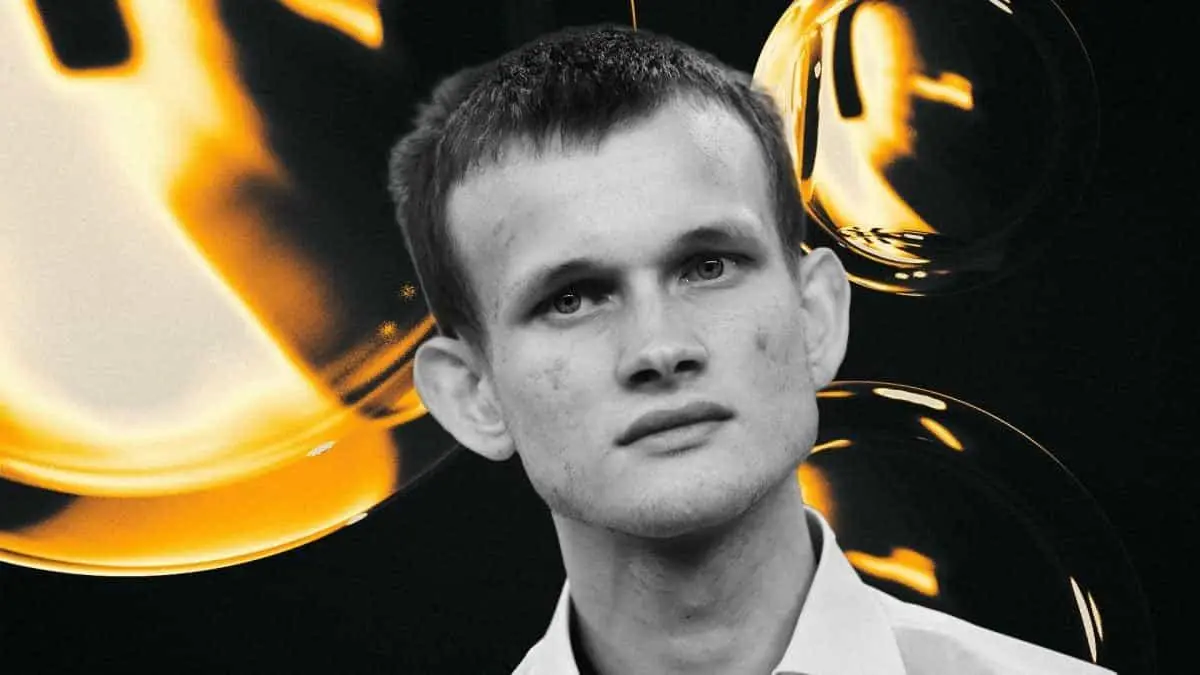
Ethereum co-founder Vitalik Buterin published his takeaways from an updated version of the network's draft long-term roadmap, describing the multi-year "Lean Ethereum" effort as a near-total rebuild of how the network operates.
In an X post Saturday, Buterin wrote that Lean Ethereum "is not a single one-shot upgrade" but a series of improvements arriving over three or four years. Still, he called it "the third major iteration" of Ethereum, on par with the Merge, adding that "almost every major piece of the protocol will be replaced."
The post follows a meeting of Ethereum researchers in Berlin in late June, Buterin said. The revised plan is published at strawmap.org, the draft roadmap that Ethereum Foundation researcher Justin Drake introduced in February, which outlines seven network upgrades through 2029.
The changes Buterin listed touch nearly everything: how the network confirms transactions are valid, the cryptography protecting it from future quantum computers, how quickly transactions become final, and how the chain stores its data. He said the transition can happen without breaking existing apps, writing, "We've done this before (the Merge), we can do it again."
Buterin also gave the effort a timeline marker, saying Hegota, currently slated as Ethereum's second upgrade of 2026, is probably the network's last thematically "pre-Lean" fork. In other words, nearly every upgrade after this year will be part of the rebuild.
Buterin identified the storage changes as "probably the single most disruptive part of the plan." Today, Ethereum keeps all of its state data, from token balances to exchange contracts, in a single, expensive-to-maintain format; the plan would keep that system for the most complex applications while adding a new, cheaper tier for simpler ones.
As an illustration, he described a possible Ethereum in 2030 where the new storage tier holds 50 times more data than the old one. The emphasis extends the case Buterin made in March for restructuring how Ethereum stores state.
Most tokens, NFTs, and DeFi apps could use the cheaper tier, Buterin said, while complex systems like Uniswap's exchange contracts would stay on the existing one. No app would be forced to move, but he said migrating would be "very cost-effective": a token redesigned for the new system could see transaction fees fall by more than 10x.
Buterin said quantum safety has "shifted up a LOT in priority." The concern is that future quantum computers could break the cryptography securing today's blockchains, and the roadmap calls for replacing every vulnerable component before that becomes possible.
The most pressing piece, he said, is finding a quantum-safe design for blobs, the temporary data storage that Layer 2 networks rely on to keep their fees low. Buterin said that work has become urgent and has already been underway for months.
Privacy received similar billing. "Privacy is no longer an afterthought, it is a first class goal," Buterin wrote, saying new features are now designed from the start around the question of how private transactions would work through them. The stance extends a push he has led through efforts like the foundation's Kohaku wallet framework.
Both themes sit among the strawmap's five "north star" goals, which include a quantum-proof network secured for the long term and private ETH transfers built directly into the base layer, rather than left to third-party apps.
Buterin also revisited the long-term push to move past the Ethereum Virtual Machine, the software environment that runs every application on the network. He named RISC-V and leanISA, two alternative computing formats, as the most likely replacements, though he acknowledged that outcome is "still far away."
His stated ideal is a network that runs entirely on the new engine, with the current EVM kept around as a translation layer so that existing apps continue to work untouched. A more efficient engine would make it far cheaper to mathematically prove that transactions are valid, a core requirement of the Lean Ethereum design, and easier to build privacy features directly into apps, he said.
In March, Buterin sketched a gradual path to get there: introduce the new format for limited internal use first, then let developers write apps in it, and only retire the EVM at the end.
The idea has been contested since Buterin first proposed a RISC-V swap in April 2025. Researchers at Offchain Labs, the core developer behind Arbitrum, argued last November that WebAssembly is the better choice; it did not appear among the contenders Buterin listed Saturday.
Buterin said Ethereum's capacity will keep rising steadily over roughly the next five years, with a large gas limit increase, meaning more room for transactions in each block, expected in the Glamsterdam upgrade. Glamsterdam, originally expected in the first half of 2026, has yet to activate, with Hegota scheduled to follow.
The post arrives about a week and a half after the Ethereum Foundation concluded a restructuring that cut 54 staff, roughly 20% of its workforce. Buterin closed by writing "Ethereum is CROPS," a reference to the censorship resistance, open source, privacy, and security properties he has said should define the foundation's narrowed focus.
Ether (ETH) was trading at roughly $1,780 as of Sunday afternoon Eastern Time, down about 1% over the past day, according to The Block's Ethereum Price page.
Disclaimer: The Block is an independent media outlet that delivers news, research, and data. As of November 2023, Foresight Ventures is a majority investor of The Block. Foresight Ventures invests in other companies in the crypto space. Crypto exchange Bitget is an anchor LP for Foresight Ventures. The Block continues to operate independently to deliver objective, impactful, and timely information about the crypto industry. Here are our current financial disclosures.
© 2026 The Block. All Rights Reserved. This article is provided for informational purposes only. It is not offered or intended to be used as legal, tax, investment, financial, or other advice.




 ETH
ETH