

De definitie van Tokenomics
In wezen is tokenomics een combinatie van de woorden "token" en "economics", die verwijst naar het economische ontwerp van een cryptocurrency en de regels die het gedrag ervan binnen een ecosysteem bepalen. Tokenomics definieert hoe een token wordt gecreëerd, verdeeld, gebruikt en uit circulatie wordt genomen, en vormt de prikkels voor gebruikers, investeerders, validators en ontwikkelaars.
Een goed gestructureerde token-economie is vaak de basis voor de duurzaamheid van een project. Hoe innovatief de technologie of overtuigend het verhaal ook is, slechte tokenomics kan adoptie, waarde en de levensvatbaarheid op lange termijn ondermijnen.
Tokenomics is in wezen de studie van het economische ontwerp van een cryptocurrency.
Het bevat details over leveringsmechanismen, distributiestrategieën, stimuleringsstructuren, nut, governance, en inflatie- of deflatiedynamiek. Als je tokenomics aan iemand wilt uitleggen, moet je enkele details over deze onderwerpen noemen:
Door tokenomics te onderzoeken, kunnen analisten en investeerders beoordelen of een project is ontworpen voor groei, stabiliteit en gebruikersbetrokkenheid; of dat het structurele gebreken bevat die de levensduur kunnen bedreigen.
In de context van crypto projecten is tokenomics meer dan een financieel model; het is een gedragsinstrument. Het bepaalt hoe deelnemers met het netwerk omgaan, wat adoptie motiveert, en hoe waarde wordt gecreëerd en in stand gehouden over tijd.

Bron: Binance
De anatomie van een token
Een cryptocurrency-token is meer dan een eenvoudige waarde-eenheid. Om de gezondheid van een project nauwkeurig te kunnen beoordelen, is het essentieel om de anatomie van zijn token te begrijpen, die gewoonlijk wordt aangeduid als tokenomics. Tokenomics definieert hoe een token is gestructureerd, verdeeld en gebruikt binnen een ecosysteem, en hoe economische prikkels zijn afgestemd tussen de deelnemers.
Voorraadstructuur
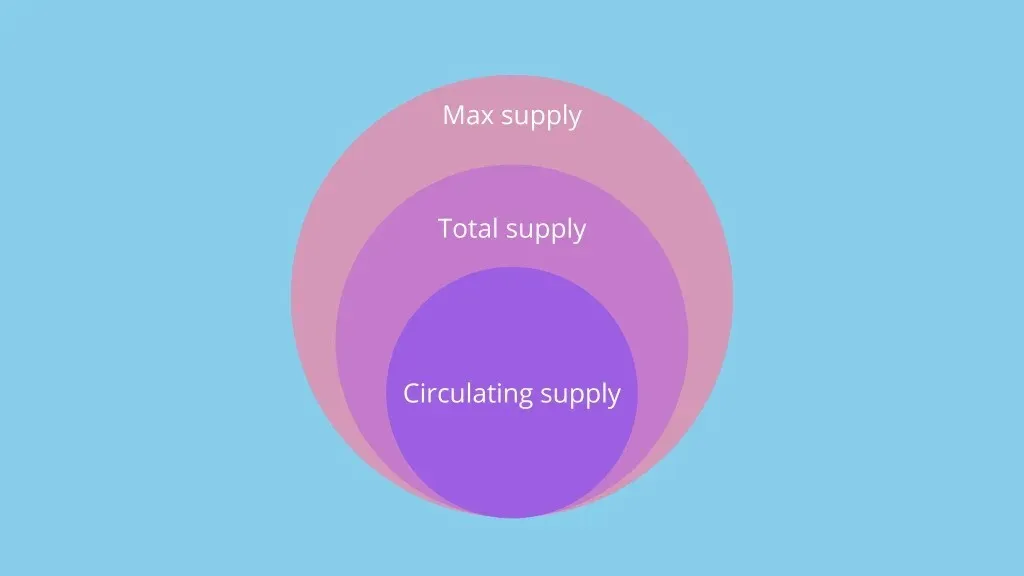
Een van de kerncomponenten van tokenanatomie is de totale voorraad versus de circulerende voorraad. Totale voorraad vertegenwoordigt het maximale aantal tokens dat ooit kan bestaan, terwijl circulerende voorraad verwijst naar het gedeelte dat momenteel beschikbaar is op de markt. Het verschil tussen deze twee cijfers heeft directe invloed op schaarste, inflatiedynamiek en het langetermijnprijs-potentieel.
Verdeling
Tokenverdeling is een andere cruciale factor. De toewijzing van tokens onder oprichters, vroege investeerders, ontwikkelaars en de bredere gemeenschap beïnvloedt decentralisatie, bestuursbalans en markstabiliteit. Slecht ontworpen distributiemodellen kunnen leiden tot excessive centralisatie en het risico van prijsmanipulatie vergroten.
Vesting en Ontgrendelingen
Even belangrijk zijn vesting- en ontgrendelingsschema's, die bepalen wanneer toegekende tokens overdraagbaar worden. Plotselinge of slecht geplande ontgrendelingen kunnen aanzienlijke verkoopdruk veroorzaken, terwijl transparante en geleidelijke vestingstructuren doorgaans lange termijn prijsstabiliteit en investeerdersvertrouwen ondersteunen.
Inflatie en Deflatie
De dynamiek van de tokenvoorraad wordt verder gevormd door inflatoire en deflatoire mechanismen. Sommige projecten geven continu nieuwe tokens uit om deelname te stimuleren, terwijl andere de voorraad verminderen door middel van burning- of op vergoedingen gebaseerde mechanismen. Elke benadering beïnvloedt de waardebehoud op een andere manier en moet worden geëvalueerd in de context van netwerkgroei en vraag.
Emissieschema
Hiermee nauw verwant is het emissieschema van de token, dat bepaalt in welk tempo nieuwe tokens in omloop komen over de tijd. Voorspelbare en afnemende emissiemodellen worden over het algemeen als duurzamer beschouwd, terwijl agressieve emissies bestaande houders kunnen verwateren als deze niet worden gecompenseerd door adoptie.
Nut
Nut blijft een centraal pijler van het ontwerp van elke token. Tokens moeten duidelijke doelen dienen binnen het ecosysteem, zoals deelname aan governance, staking, transactiekosten of toegang tot diensten. Sterk nut verankert de vraag aan daadwerkelijk netwerkgebruik en niet alleen aan speculatie.
Bestuur
Bestuursmechanismen bepalen hoe de besluitvormingsmacht wordt verdeeld onder tokenhouders. Effectieve bestuursstructuren stellen de gemeenschap in staat deel te nemen aan protocol-updates, beheer van de schatkist en strategische richting, terwijl te gecentraliseerd bestuur systemisch risico kan introduceren.
Prikkels
Ten slotte stemmen prikkels en beloningen het gedrag van belanghebbenden af op de langetermijndoelstellingen van het netwerk. Goed ontworpen prikkelsystemen moedigen zinvolle participatie en waardecreatie aan, terwijl niet-uitgelijnde beloningen vaak kortetermijnspeculatie aantrekken ten koste van duurzaamheid.
Voorraadmechanica: Totale voorraad versus circulerende voorraad
Het onderscheid tussen totale voorraad en circulerende voorraad is een hoeksteen van tokenomics-analyse. Totale voorraad definieert het maximale aantal tokens dat ooit kan bestaan, terwijl circulerende voorraad het deel vertegenwoordigt dat momenteel op de markt beschikbaar is. Projecten met grote onverkochte reserves of tokens die vastzitten in langlopende vesting-schema's kunnen aanzienlijke prijsdruk ervaren zodra die tokens in omloop komen.
Aan de andere kant kan een relatief kleine en gecontroleerde circulerende voorraad een prijsstijging door schaarste creëren, maar het kan ook de liquiditeit beperken en de adoptie vertragen als de toegang tot de token te beperkt is. Begrijpen hoe de voorraad in de loop van de tijd overgaat van vergrendeld naar circulerend is essentieel voor het evalueren van langetermijnstabiliteit.
Hoe dit te gebruiken in projectanalyse:
Analisten moeten de huidige circulerende voorraad, de resterende vergrendelde tokens en de tijdlijn voor toekomstige releases bijhouden. Het modelleren van potentiële verwatering helpt te beoordelen of toekomstige voorraadverhogingen waarschijnlijk de vraag zullen overtreffen, wat cruciaal is voor het evalueren van langdurige duurzaamheid in plaats van kortetermijnprijsbewegingen.
Bron: Tokenomics Learning
Vesting- en ontgrendelingsschema's
Vesting- en ontgrendelingsschema's bepalen wanneer toegewezen tokens, zoals die aan oprichters, vroege investeerders of ecosysteemfondsen, overdraagbaar worden. Zelfs goed ontworpen distributiemodellen kunnen problematisch worden als grote delen van de tokens tegelijk ontgrendelen. Plotselinge ontgrendelingsmomenten veroorzaken vaak een sterk verkoopdruk en verhogen de volatiliteit.
Transparante, geleidelijke vestingstructuren signaleren een langetermijnafstemming tussen het team, investeerders en het netwerk, terwijl agressieve of ondoorzichtige ontgrendelingsschema's het vertrouwen juist kunnen ondermijnen.
Hoe dit te gebruiken bij projectanalyse:
Bekijk vesting-tijdlijnen en aankomende ontgrendelingsmomenten samen met historische prijsbewegingen. Projecten met voorspelbare, uitgebreide vestingschema's zijn over het algemeen beter gepositioneerd om op lange termijn prijsstabiliteit en investeerdersvertrouwen te behouden.
Inflationaire versus deflationaire modellen
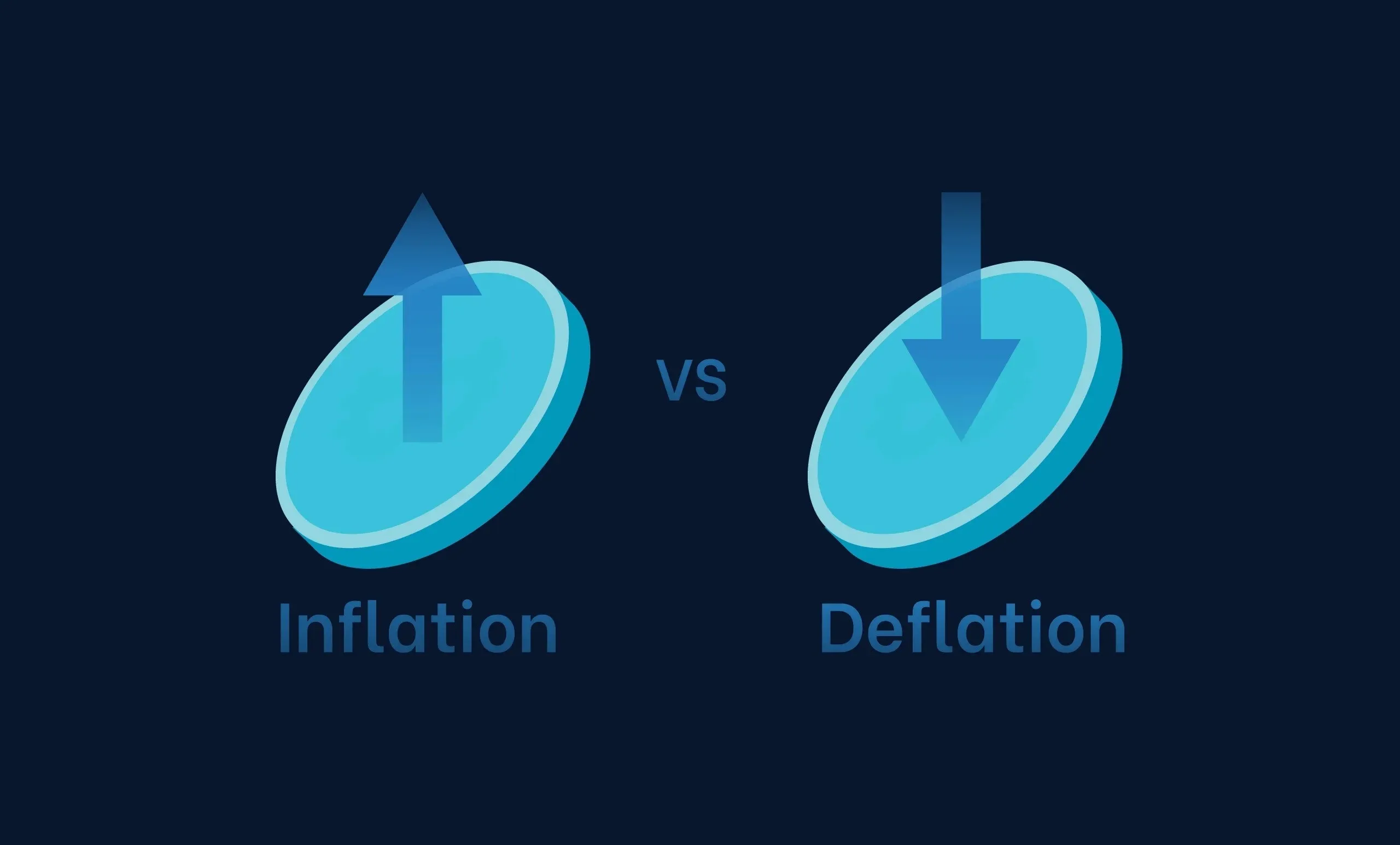
Inflatoire tokens vergroten de voorraad in de loop van de tijd, meestal om deelname te stimuleren. Proof of stake-netwerken geven bijvoorbeeld nieuwe tokens uit als beloningen voor validators. Hoewel inflatie netwerkbeveiliging en groei kan ondersteunen, loopt men bij overmatige uitgifte het risico dat de tokenwaarde verwatert als de vraag niet evenredig toeneemt.
Deflationaire modellen verminderen de voorraad via mechanismen zoals het verbranden van tokens, het terugkopen of het vernietigen op basis van vergoedingen. Deze modellen kunnen langdurige waardebehoud ondersteunen, maar kunnen ook de liquiditeit verminderen of speculatief vasthouden aanmoedigen als ze niet zorgvuldig worden uitgebalanceerd.
Hoe dit te gebruiken in projectanalyse:
Evalueer of inflatieniveaus gerechtvaardigd zijn door netwerkgroei en gebruik. Voor deflatoire modellen, beoordeel of de vermindering van het aanbod wordt aangedreven door echte economische activiteit of door kunstmatige schaarste. Duurzame projecten behouden een balans tussen prikkels en waardebehoud.
Bron: Crypto Adventure
Token Emissieschema
Naast inflatie zelf bepaalt het emissieschema hoe snel nieuwe tokens in omloop komen. Emissies die in de loop van de tijd afnemen, zijn vaak gunstig voor houders op lange termijn, terwijl agressieve vroege emissies vaak profiteren van deelnemers op korte termijn ten koste van duurzaamheid.
Een voorspelbare emissiecurve stelt deelnemers in staat om toekomstige aanbodcondities te modelleren en vermindert onzekerheid over verwatering.
Hoe dit te gebruiken bij projectanalyse:
Analyseer emissiecurves in relatie tot adoptie-statistieken. Emissies zouden geleidelijk moeten afnemen naarmate het netwerk volwassen wordt en het gebruik groeit, wat wijst op een overgang van stimulansgedreven groei naar organische vraag.
Token Utility en Incentives
Tokenfunctionaliteit vertegenwoordigt de praktische rol die een token speelt binnen zijn ecosysteem. Tokens kunnen worden gebruikt voor transactiekosten, staking, governance, toegang tot diensten, of onderpand binnen DeFi-protocollen. Zonder duidelijke functionaliteit loopt een token het risico puur speculatief te worden.
Incentive-mechanismen, zoals stakingbeloningen, liquiditeitsmining of ontwikkelaarsbeurzen, stimuleren deelname en ecosysteemgroei. Incentives moeten echter zorgvuldig worden ontworpen om te voorkomen dat er kortetermijnkapitaal wordt aangetrokken dat vertrekt zodra de beloningen afnemen.
Hoe dit te gebruiken in projectanalyse:
Beoordeel of de vraag naar de token wordt gedreven door werkelijk gebruik of voornamelijk door beloningen. Duurzame projecten koppelen incentives aan langetermijnwaardeschepping in plaats van tijdelijke opbrengstextractie.
BTC en ETH utilities vergeleken
Waar worden deze munten voor gebruikt?

Bestuur en Besluitvormingsmacht
Bestuurstokens geven houders de mogelijkheid om invloed uit te oefenen op protocol-upgrades, toewijzing van de schatkist en strategische richting. Effectief bestuur verdeelt de besluitvormingsmacht over een brede gemeenschap, vermindert het risico op centralisatie en verbetert de veerkracht.
Zwakke bestuursstructuren, waarbij de stemkracht geconcentreerd is bij een paar entiteiten, kunnen decentralisatie ondermijnen en het project blootstellen aan manipulatie.
Hoe dit te gebruiken bij projectanalyse:
Beoordeel participatiegraad bij het bestuur, verdeling van stemkracht en transparantie van beslissingen. Sterk bestuur is een signaal dat een project zich kan aanpassen en evolueren zonder afhankelijk te zijn van gecentraliseerde controle.
Marktmechanismen en Liquiditeit
Liquiditeit en marktstructuur spelen een belangrijke rol in prijsstabiliteit en bruikbaarheid. Zeer liquide tokens zijn gemakkelijker verhandelbaar en minder kwetsbaar voor manipulatie, terwijl dunne liquiditeit kan leiden tot extreme volatiliteit en een slechte gebruikerservaring.
Tokenomics bepaalt vaak hoe liquiditeit wordt gecreëerd en gehandhaafd, hetzij via gedecentraliseerde beurzen, liquiditeitspools, stimulansen of gecentraliseerde market-making strategieën.
Hoe dit te gebruiken bij projectanalyse:
Analyseer waar de liquiditeit geconcentreerd is en hoe deze wordt gestimuleerd. Duurzame liquiditeit moet worden ondersteund door organische handelsactiviteit in plaats van alleen door tijdelijke beloningen.
Waardevastlegging en Tokensinks
Waardevangmechanismen bepalen hoe economische activiteit binnen een netwerk ten goede komt aan tokenhouders. Token burns, herverdeling van vergoedingen, staking opbrengsten gefinancierd door echte inkomsten en terugkoopmechanismen helpen allemaal om netwerkgebruik in lijn te brengen met tokenwaarde.
Zonder effectieve waardevang kan zelfs een zeer actief netwerk er niet in slagen groei om te zetten in langetermijn duurzaamheid van de token.
Hoe dit te gebruiken bij projectanalyse:
Onderzoek of verhoogd netwerkgebruik direct ten goede komt aan tokenhouders. Projecten die gebruik omzetten in meetbare economische waarde zijn doorgaans veerkrachtiger op de lange termijn.
Bron: Zent
Hoe Tokenomics de Prijs Beïnvloedt
Tokenomics beïnvloedt direct het prijsverloop van een token. Tokens met een beperkte voorraad, sterke bruikbaarheid, actieve adoptie en goed afgestemde prikkels behouden waarschijnlijk hun waarde of stijgen in de loop van de tijd. Daarentegen kunnen tokens met een overmatige voorraad, zwakke bruikbaarheid of slecht gestructureerde prikkels sterke volatiliteit en waardevermindering op de lange termijn ervaren. Het begrijpen van deze dynamiek is cruciaal voor zowel investeerders als analisten bij het voorspellen van prijstrends.
Hoe Tokenomics het Gedrag van Investeerders Beïnvloedt
Investeerders gebruiken tokenomics als een lens om potentiële opbrengsten en risico's te evalueren. Projecten met eerlijke distributie, duidelijke bruikbaarheid en prikkelstructuren die zijn afgestemd op netwerkgroei trekken serieuze langetermijninvesteerders aan. Daarentegen moedigen slecht ontworpen token-economieën vaak speculatief gedrag of vroegtijdige afhaken aan. Door tokenomics te analyseren, kunnen investeerders een onderscheid maken tussen kortetermijnhype en duurzame kansen.
Hoe de Tokenomics van een Project te Analyseren
Professionele analyse van tokenomics houdt rekening met meerdere factoren, waaronder:
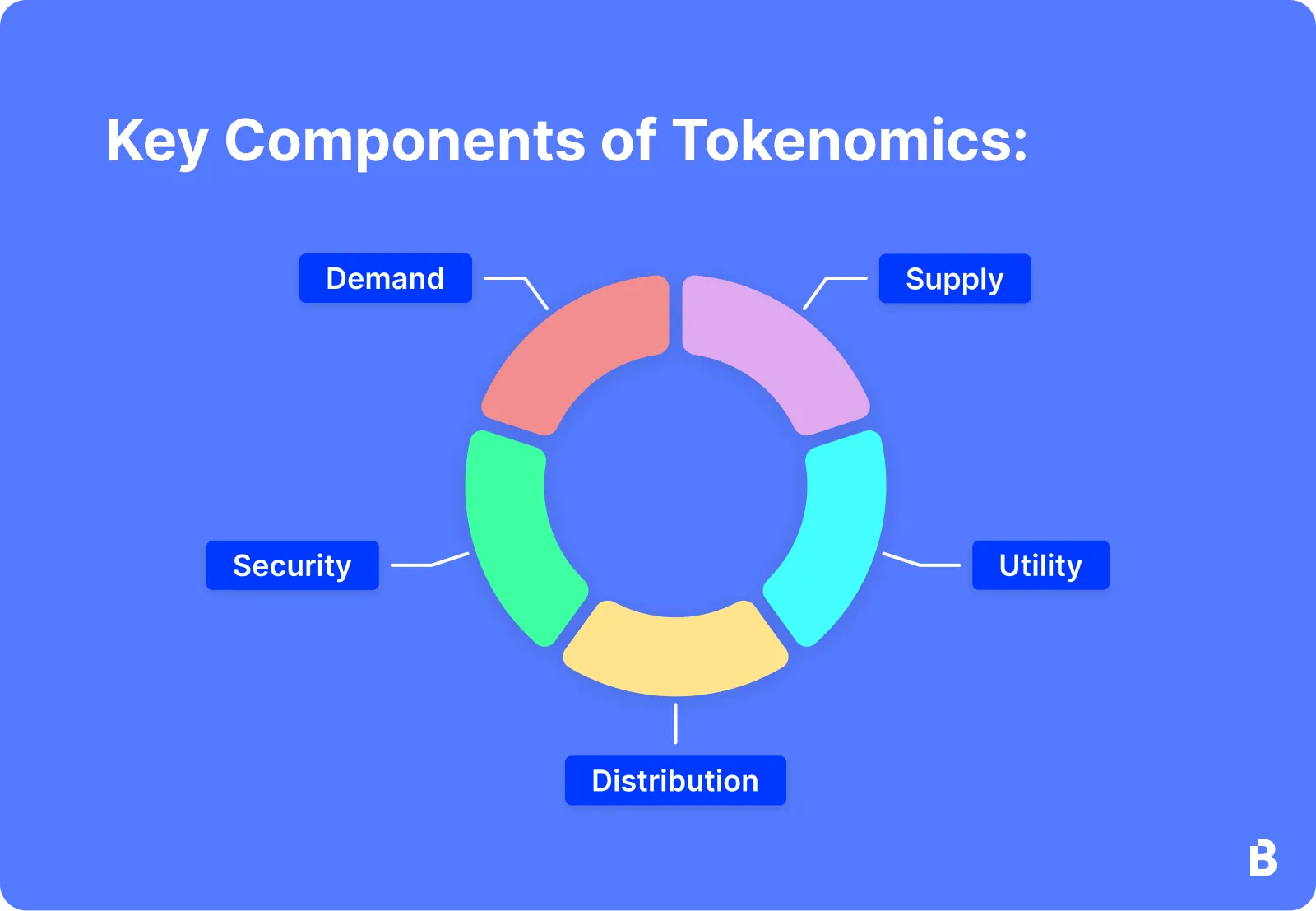
- Structuur van de voorraad: totaal versus circulerende voorraad en vesting schema's.
- Eerlijkheid in distributie: toewijzing aan oprichters, investeerders en de gemeenschap.
- Nut en adoptiepotentieel: of de token zinvolle gebruikstoepassingen heeft.
- Incentives en beloningen: hoe het netwerk deelname stimuleert.
- Ontwerp van governance: decentralisatie, stemrechten, en besluitvormingsprocessen.
- Inflatie-/deflatiemodel: de impact op de langetermijnwaarde.
- Liquiditeit: gemakkelijke koop- en verkoopmogelijkheden van tokens zonder excessieve slippage.
Een uitgebreide evaluatie van deze elementen stelt analisten in staat om onderscheid te maken tussen projecten met echt langetermijnpotentieel en projecten met oppervlakkige aantrekkingskracht.
Begin met het analyseren van je eerste cryptoprojecten door de volledige lijst met activa die op LBank staan vermeld te verkennen:
Goede Tokenomics versus Slechte Tokenomics
Goede tokenomics biedt een solide basis voor de langetermijnhoudbaarheid van een project. Het brengt distributie, bruikbaarheid, aanbod, prikkels en governance in balans om adoptie en gezonde netwerkontwikkeling te stimuleren. Slecht ontworpen tokenomics kunnen daarentegen volatiliteit, niet-uitgelijnde prikkels en zwakke participatie creëren, wat de stabiliteit en geloofwaardigheid van een project ondermijnt. Het begrijpen van deze verschillen helpt investeerders en analisten snel projecten met echt potentieel te onderscheiden van die gebouwd zijn op kortetermijnspeculatie.
Tokenomics die werken vs. tokenomics die niet werken
Waarschuwingstekens in Tokenomics die Risico's Aanduiden
Verschillende waarschuwingssignalen kunnen wijzen op potentiële problemen in de tokenomics van een project:
- Geconcentreerd eigendom bij een kleine groep wallets.
- Overmatige inflatie of ongecontroleerde tokenuitgifte.
- Tokens zonder duidelijke functionaliteit of zwakke netwerkadoptie.
- Niet-uitgelijnde prikkels die kortetermijnspeculatie aanmoedigen.
- Slecht ontworpen governance met gecentraliseerde controle.
Het vroegtijdig herkennen van deze waarschuwingstekens kan voorkomen dat er geïnvesteerd wordt in projecten met structurele zwaktes.
Waarom Tokenomics de Kern is van Crypto Projectanalyse
Tokenomics is de basis van elk succesvol cryptoproject. Het bepaalt de voorraadmechanismen, prikkels, functionaliteit en governance die de duurzaamheid, adoptie en langetermijnwaarde van een netwerk bepalen. Voor investeerders, analisten en deelnemers in het ecosysteem is begrip van tokenomics essentieel.
Een zorgvuldige analyse van tokenomics geeft inzicht in de economische gezondheid van een project, het gedrag van deelnemers en het groeipotentieel. In het snel evoluerende crypto-landschap blijft tokenomics de belangrijkste factor die projecten onderscheidt die zijn ontworpen om te blijven bestaan van diegenen die waarschijnlijk zullen falen.
