Cybersecurity in Crypto: Defending Wallets and Exchanges from 2026's Top Threats

Defend your crypto in 2026: Master multisig and post-quantum wallets to outsmart AI deepfakes, address poisoning, and exchange exploits. Stay solvent with ZK-audits and ruthless self-custody.
Cybersecurity in crypto sucks right now. Every week brings fresh headlines about drained wallets, hacked exchanges, and billions vanishing into thin air. In 2026, with DeFi TVL hitting $500 billion and retail traders piling into perps and memes, the attacks feel smarter and more relentless. Quantum computing edges closer, AI-driven phishing floods inboxes, and nation-state hackers target centralized platforms like never before.
If you're holding assets or trading on exchanges, ignoring this means risking everything. This guide breaks down the top threats hitting wallets and exchanges this year and hands you practical defenses to stay safe.
The Wallet Drain Epidemic: Private Key Heists and Seed Phrase Traps
Wallets are ground zero for most losses. Hackers don't need to crack your funds directly; they steal the keys that unlock them. Seed phrase scams lead the pack. Bad actors pose as support on Discord or Telegram, tricking users into "verifying" their 12- or 24-word phrases. Once they have it, game over—your BTC or ETH is theirs in minutes.
For a deeper technical breakdown on securing your on-chain assets, refer to the LBank User Security Guide on Protecting Your Web3 Wallet. It covers the specific hygiene needed for MetaMask and hardware wallet integration.
Then come the clipboard hijackers. Malware swaps your copied wallet address with the attacker's, right as you paste it into a transaction. You think you're sending 1 ETH to your hardware wallet, but it ends up with a thief. In Q1 2026 alone, these stole over $200 million, per Chainalysis reports.
But 2026 has introduced a more subtle killer: Address Poisoning. Scammers use vanity address generators to send $0 'dust' transactions to your wallet from an address that mimics yours (same first and last 5 digits). If you’re lazy and copy your own address from your recent transaction history for your next deposit, you’re sending funds directly to a hacker. Always use a verified Address Book or ENS name—never trust your history tab.
Hardware wallets aren't invincible either. Supply chain attacks hit devices like Ledger during manufacturing, embedding backdoors. And don't get me started on SIM swaps, where hackers socially engineer your phone carrier to port your number and intercept 2FA codes.
Fight back like this:
- Never share seed phrases. Store them offline on metal plates, split across locations.
- Use multisig wallets requiring 2-of-3 approvals for big moves.
- Enable address whitelisting on apps like MetaMask—only pre-approved addresses work.
- Run wallet software on air-gapped machines for high-value holds.
Exchange Hacks: The Centralized Weak Link
Exchanges hold the honey pot. Centralized ones like those offering spot, futures, and perps store user funds in hot wallets for liquidity. A single breach can wipe out millions. Remember the $600 million Ronin hack in 2022? 2026 ups the ante with insider threats and API exploits.
Flash loan attacks evolved into "oracle manipulation" schemes. Hackers borrow huge sums via DeFi, tweak price feeds, liquidate positions, and repay before anyone notices. Centralized exchanges suffer spillover when they custody leveraged products.
Ransomware hits hard, too. Groups like LockBit demand payment in crypto to unlock frozen servers, disrupting trades for days. And with MiCA regulations in Europe, compliant exchanges face new audit burdens that expose vulnerabilities during compliance checks.
Lock it down:
- Withdraw to personal wallets after trading—don't leave funds idle on exchanges.
- Stick to proof-of-reserves (PoR) verified platforms with real-time attestations.
- Use sub-accounts for perps trading to isolate risk.
- Enable withdrawal whitelists and 2FA with hardware keys like YubiKey, not SMS.
2026's Emerging Killers: AI, Quantum, and Supply Chain Nightmares
This year, threats go next-level. AI phishing crafts personalized emails mimicking your exchange's CEO, complete with deepfake voice notes begging for "urgent fund verification." Detection tools lag because the fakes pass CAPTCHA and behavioral checks.
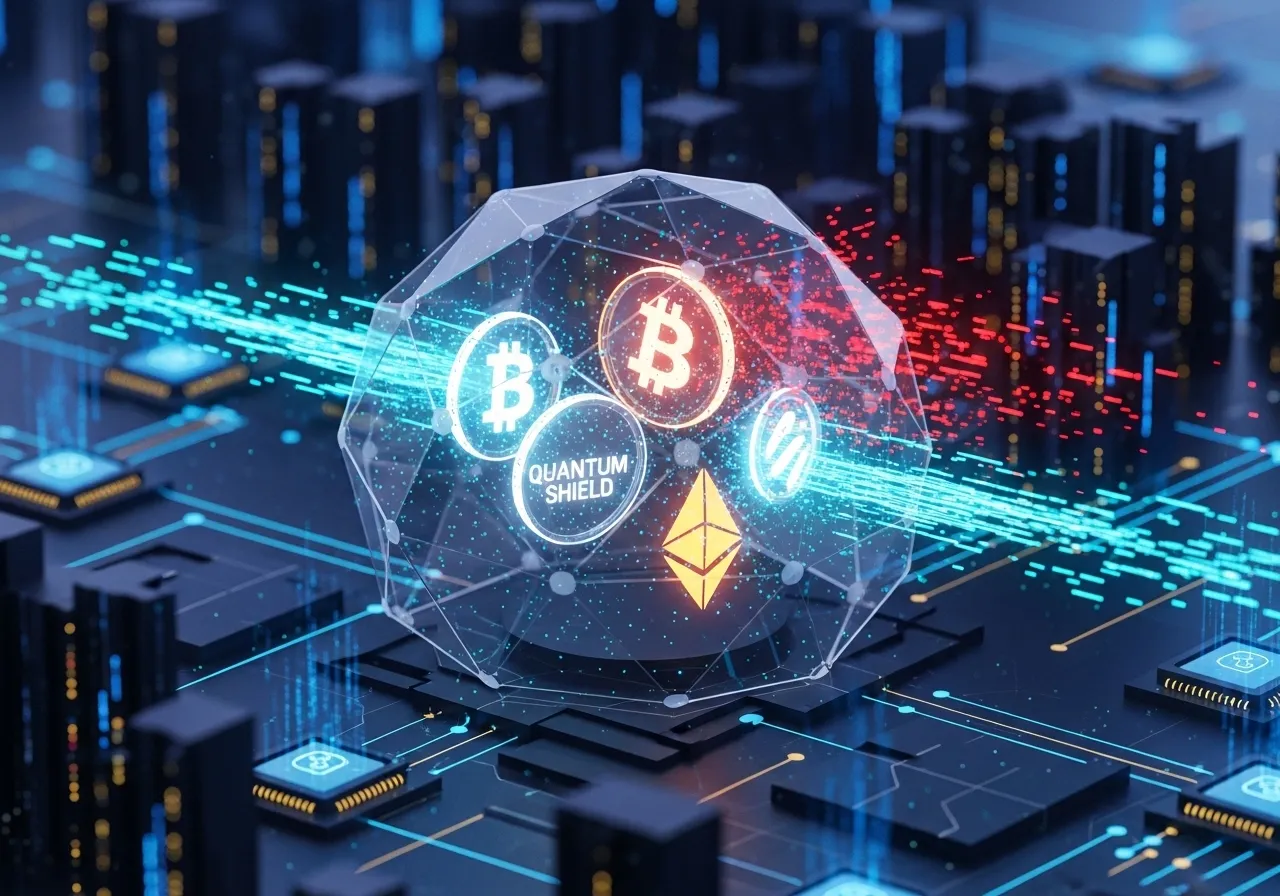
Quantum computing looms large. Google's Sycamore and rivals cracked RSA encryption benchmarks last month. Elliptic curve crypto (secp256k1) powers Bitcoin and Ethereum wallets—quantum rigs could derive private keys from public ones in hours, not eons.
Supply chain risks aren't just theoretical anymore. Following the January 2026 Global-e breach, which leaked the purchase history and home addresses of thousands of Ledger users, we’ve seen a wave of 'Hyper-Realistic Phishing.' Attackers are now using your actual purchase date and device model to craft terrifyingly accurate emails or even physical mailers that 'require' a firmware update to 'patch a vulnerability.' It’s the ultimate trap: the tech is fine, but the user is socially engineered.
The technical community is currently split over BIP-2026-Q, a proposal to 'freeze' old, non-quantum-resistant P2PK addresses (including Satoshi’s coins) to prevent a systemic 'Quantum Dump.' Whether or not it passes, the message is clear: migrate your legacy '1' or '3' addresses to SegWit (bc1q) or Taproot (bc1p) wallets immediately
Proactive shields:
- Adopt post-quantum signatures like Dilithium for new wallets—Exodus and Trust Wallet rolled them out in Q1.
- Train AI detectors like Google's Perspective API on your inbox; flag anything suspicious.
- Verify all updates via official channels and SHA-256 hashes.
- Run node software yourself for DeFi to cut reliance on third-party frontends.

Everyday Habits That Actually Work
Security isn't just tech, it's behavior. Use a password manager like 1Password for unique, 20+ character passphrases everywhere. Avoid public Wi-Fi for trades; VPNs like Mullvad hide your IP from chain analysis.
For teams or high-net-worth traders, set up cold storage with geographic dispersion—one vault in a safe, another in a bank box. Regularly simulate attacks: red-team your setup with tools like Metasploit to find holes.
Monitor on-chain with dashboards like Nansen or Arkham. Set alerts for unusual outflows from your addresses. And ensure what you can—Nexus Mutual covers smart contract risks up to $100 million per policy.
Under 2026’s fully enforced MiCA regulations in Europe, many exchanges now offer 'Compliant Wallets' with built-in Social Recovery. If you’re a retail trader who fears losing a seed phrase, look for platforms utilizing Zero-Knowledge Proofs (ZKP) for audits. They prove the exchange is solvent without leaking your transaction metadata to third-party compliance vendors—avoiding the exact kind of leak that hit Ledger users earlier this year.
Threat Type (2026) | Est. Impact (Q1 '26) | The "Sarge" Approved Defense |
Address Poisoning | $150M+ | Use Saved Address Books; never copy from history. |
Real-time Deepfakes | $320M | Verify with "Off-chain" shared secrets/passwords. |
Qrishing (QR Phishing) | $95M | Always verify the URL manually after scanning. |
Supply Chain (Firmware) | $210M | Wait 48 hours before installing new hardware updates. |
ZKP/Audit Leaks | $500M+ | Stick to Tier-1 exchanges with internal ZK-audits. |
Wrapping Up: Stay Vigilant, Trade Smart
Crypto’s freedom is a double-edged sword; the same decentralization that grants you financial sovereignty also places the burden of defense squarely on your shoulders. As we move through 2026, the threats—from AI-driven social engineering to the looming shadow of quantum computing—will only become more sophisticated as global adoption surges.
However, security isn't a one-time setup; it’s a continuous mindset. By prioritizing self-custody, ruthlessly verifying every transaction hash, and treating your security protocol with the same discipline as your trading edge, you transition from a target to a fortress. In a market where billions can vanish in a heartbeat, the "boring" habits of metal seed backups and hardware 2FA are what keep you in the game. Losses happen to the complacent and the overconfident—don’t let a lack of preparation be the reason your portfolio hits zero. Stay sharp, stay paranoid, and keep your assets under your own lock and key.