Bitcoin’s Black February - Surviving the Breach of the $70,000 Support Floor
 Abdul Razzaq2026-02-11
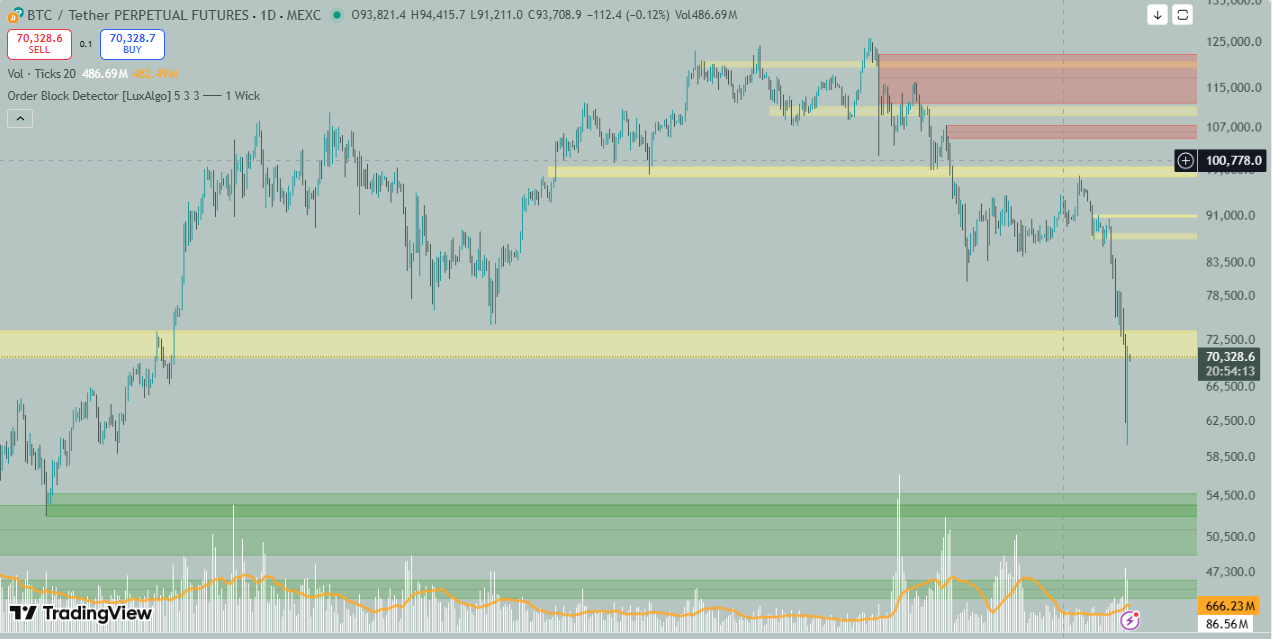
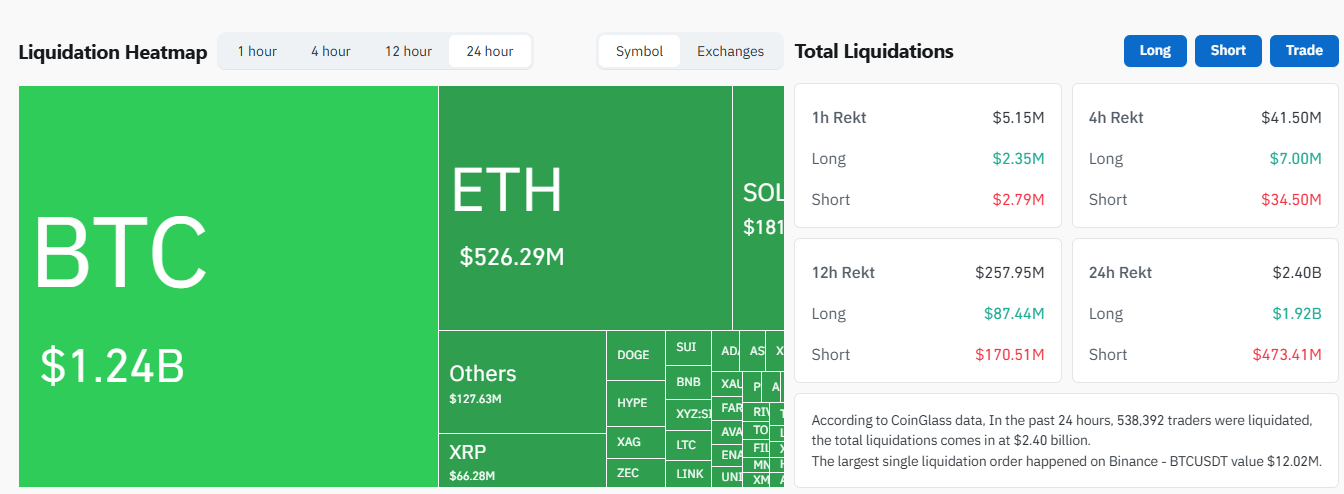
On February 6, 2026, Bitcoin (BTC) decisively breached its critical $70,000 support level, hitting an intraday low of $60,074 and triggering nearly $2 billion in liquidations.
The Crash That Wasn’t Just Crypto
February 6, 2026 marked a sharp regime shift for crypto markets. Bitcoin decisively lost its $70,000 support level, triggering a cascade of liquidations across derivatives markets and wiping out close to $2 billion in leveraged positions in under 24 hours. This was not an isolated crypto event. It unfolded against a broader global risk unwind that began days earlier with a historic crash in precious metals and accelerated across equities, commodities, and digital assets. At the time of writing, Bitcoin trades near $66,000, down more than 45% from its October 2025 peak near $126,000. The broader crypto market has shed nearly $800 billion in market capitalization over the past month alone. The narrative of Bitcoin as “digital gold” faced a stress test, as both BTC and traditional safe havens sold off in tandem. This piece breaks down what actually happened, why it happened, and what this reset may mean for crypto markets heading into the next phase of the cycle.
What Actually Happened on February 6
Bitcoin fell roughly 17% in a 24-hour window, slicing cleanly through the $70,000 support zone that had previously acted as a key psychological and technical level. The move triggered forced liquidations across centralized exchanges, with over $1.98 billion wiped out in crypto positions. Long positions accounted for the majority of liquidations, revealing how one-sided market positioning had become.
Intraday price briefly fell near $60,000 before stabilizing around the mid-$60K region. At the same time:
- Ethereum lost key psychological support near $2,000
- Major altcoins underperformed BTC as liquidity drained
- Crypto-linked equities and ETFs saw renewed outflows
- Risk premiums surged across correlated tech markets
This was not panic driven by retail alone. Order book data and exchange flow metrics suggested institutional distribution, with whales using high-liquidity zones to exit positions into market strength before the final breakdown.
The Real Catalysts: Why This Crash Was Inevitable
1. Institutional Distribution and Liquidity Drain
Coinbase spot premiums turned sharply negative, signaling U.S.-based selling pressure. Stablecoin reserves fell by more than $14 billion since December, removing a key source of on-chain liquidity. This matters because stablecoin inflows historically lead risk-on behavior in crypto. Their decline signals capital exiting the ecosystem.
2. Policy Risk and the Return of Dollar Strength
Hawkish expectations around Federal Reserve leadership and renewed concerns over tighter monetary conditions strengthened the U.S. dollar. Crypto remains structurally sensitive to dollar liquidity. When the dollar rallies, global risk assets struggle. Bitcoin is not immune to this relationship, regardless of the “digital gold” narrative.
3. Geopolitical Risk Premium
Trade tensions, renewed tariff threats, and geopolitical instability in energy-producing regions pushed investors into cash. Ironically, this did not benefit crypto. Instead, it exposed Bitcoin’s growing correlation with tech equities during periods of macro stress.
4. Excessive Leverage
The crash was mechanically amplified by overleveraged positioning. Funding rates and open interest suggested that traders were positioned for continuation, not defense. Once liquidation cascades begin, price discovery becomes disorderly.
The Geopolitical Catalyst
One of the underappreciated drivers of the February sell-off was the ongoing geopolitical friction involving the United States and Iran. Markets responded not just to economic data or policy risk but to heightened perceptions of military escalation and conflict risk. In early 2026, renewed geopolitical headlines including war rhetoric and heightened military posturing factored into risk pricing. Tensions between the U.S. and Iran, exacerbated by spikes in rhetoric and renewed warnings to evacuate American citizens from Iran, acted as a volatility accelerator for risk assets. Historically, escalations involving Iran have affected market sentiment. In 2025, U.S. airstrikes on Iranian nuclear sites correlated with sharp sell-offs in crypto and other risk assets, as investors rotated into traditional safe havens like gold and Treasury bonds. This time, even without a formal declaration of war, the fear premium associated with Middle East instability was enough to push markets toward defensive positioning, contributing to broad selling pressure.
Risk Assets Lose Footing
The crypto drawdown coincided with weakness across broad risk markets. Precious metals, once safe-haven beneficiaries, experienced volatility and corrective selling after earlier rallies.
Equities, particularly tech and growth stocks correlated with crypto, also faced pressure. These interlinked reactions are characteristic of episodes where market participants rapidly reassess liquidity and risk appetite. Rather than acting as a diversification hedge, Bitcoin and other major digital assets correlated more strongly with global risk sentiment, trading more like high-beta tech assets than isolated hedges.
Why Leverage Made This Worse
Crypto markets in late 2025 and early 2026 were characterized by elevated leverage. Futures open interest and perpetual funding rates were high even as volatility increased an unstable combination. When risk sentiment shifts, leverage becomes a force multiplier: forced liquidations feed price moves, which in turn trigger more liquidations.
In addition to leverage, institutional flows in spot BTC and ETH ETFs shifted toward outflows, reflecting short-term risk aversion among professional allocators.
Safe Havens?
In past crises, assets like gold and silver often benefit from capital flight. In early February, precious metals did rally initially on geopolitical fear, but profit-taking and liquidity storms later pared those gains. Bitcoin did not behave as a true safe haven either. Instead, it mirrored broader risk assets. This aligns with recent academic findings showing that following institutional integration such as spot BTC ETFs Bitcoin’s correlation with equities has strengthened, making it behave more like a risk asset during stress periods.
Sentiment and Risk Metrics
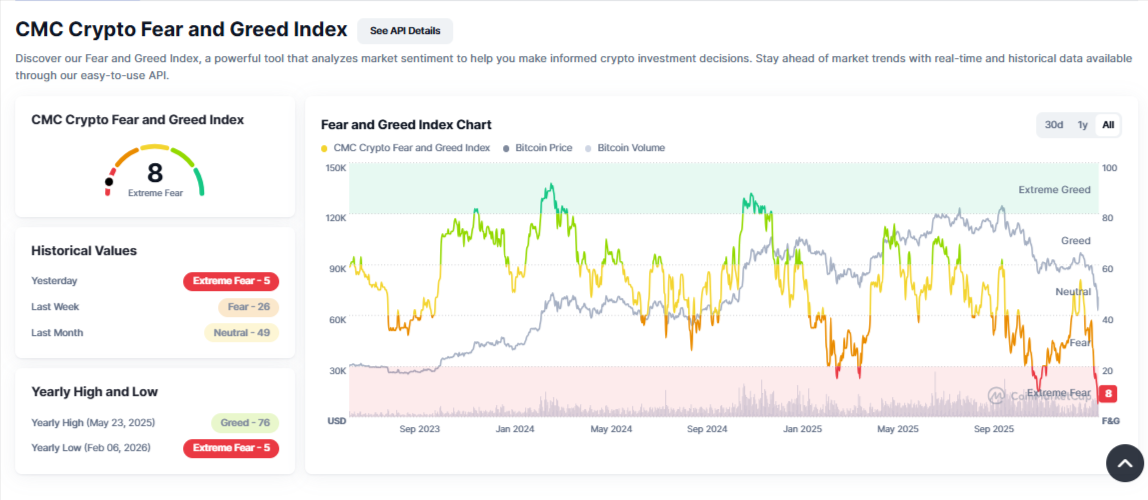
Crypto’s Fear & Greed Index plunged into extreme fear territory as prices broke key supports. Historically, similar readings have coincided with capitulation points where weak hands exit and long-term holders remain anchored. However, sentiment alone is not a sufficient buy signal. Markets may remain volatile until clearer macro inflection points emerge such as shifts in liquidity conditions or central bank policy signals Right now, sentiment is bearish but rational. Investors are no longer pricing exponential upside. They are pricing uncertainty, policy risk, and macro fragility.
Comparative Impact
Bitcoin’s decline pulled the entire crypto complex lower. Ethereum and high-beta altcoins experienced sharper percentage drawdowns, consistent with historical deleveraging phases. Crypto-linked equities sold off alongside Nasdaq-heavy tech stocks, reinforcing the narrative that crypto remains part of the broader risk-asset basket during downturns. The precious metals crash in late January revealed a parallel dynamic. Gold and silver were crowded trades driven by geopolitical hedging narratives. Once those positions unwound, it removed the illusion of safety across traditional hedges. The result was a synchronized risk reset. This is what systemic deleveraging looks like. Everything sells, correlations go to one, and narratives temporarily collapse.
During this period:
- U.S. equities saw volatility spikes and sector rotations.
- Precious metals experienced sharp intraday swings.
- Crypto’s sell pressure was exacerbated by exchange derivatives unwinding.
This correlation highlights a maturing market where cross-asset flows drive pricing more than isolated crypto factors.
Where We Go From Here:
In the short term, traders increasingly view Bitcoin between $54,000 and $70,000 as a potential base formation range during the deleveraging phase.
Longer-term narrative drivers now must include:
- Macro liquidity conditions
- Central bank policy clarity
- Geopolitical risk resolution
- Institutional allocation trends
Crypto’s path forward will likely depend on how these macro foundations evolve.
Is This a Supply Reset or Structural Break?
The sell-off does not necessarily signal the end of the bull market. Instead, it may represent a structural reset where speculative leverage is purged, liquidity pools are rebalanced, and market participants recalibrate for a more disciplined phase. This is a familiar pattern in financial cycles: growth is built, excess accumulates, a correction occurs, and then recovery begins from a more stable base.
Key Takeaways for Traders and Investors
- Macro risk now matters as much as crypto fundamentals. Geopolitical tension and liquidity changes can dominate crypto pricing.
- Leverage magnifies market stress. Overleveraged positioning accelerates declines in risk-off regimes.
- Safe-haven narratives are contextual. Bitcoin and gold both responded to broader risk sentiment, not in isolation.
- Sentiment is a lagging indicator. Extreme fear can coincide with potential entry zones, but requires macro follow-through.
Conclusion:
The February 6 crash was not a sign that crypto is broken. It was a reflection of how integrated global markets have become and how risk assets behave under stress.
Bitcoin has survived, consolidating key supports and signaling that market structure remains intact but it is no longer insulated from the macro world. Future cycles will likely feature deeper interactions between geopolitical risk, liquidity policy, and digital asset pricing. Understanding these connections is now essential for both traders and long-term allocators.
Disclaimer: This analysis is for informational purposes only and does not constitute financial advice. Cryptocurrency markets involve substantial risk, especially during periods of "Extreme Fear." Always conduct your own thorough research (DYOR) and manage your risk exposure.